What Is the Biggest Predator in the Great Barrier Reef?
Most people ask which is the biggest predator in the Great Barrier Reef. Assume the answer is simple, but apex predators don’t work to a tourist schedule. The Reef is a living system — a massive UNESCO World Heritage Site, shaped by currents, coral polyps, marine predators, ecosystem engineers and the occasional creature that looks like it came straight out of a sci-fi movie. After years of guiding travellers across the tropics, I’ve learned the Reef’s food web is as layered as a family Christmas trifle — colourful, messy and full of surprises.
Meet the Apex Species Driving System Balance
Here’s the thing, most people don’t realise: the Great Barrier Reef needs its apex predators to keep the whole marine ecosystem working. These hunters manage behaviour, regulate numbers and keep the reef structure in check — from tiny bommies near Port Douglas to the deep blue walls of the Coral Sea.
When I explain this during reef briefings, people suddenly “get it”. Predators aren’t lurking dangers — they’re project managers holding the place together while the rest of the reef gets on with the business of eating, spawning and avoiding being someone else’s lunch.
The Usual Suspects: Sharks, Snakes, Rays, and the Rest
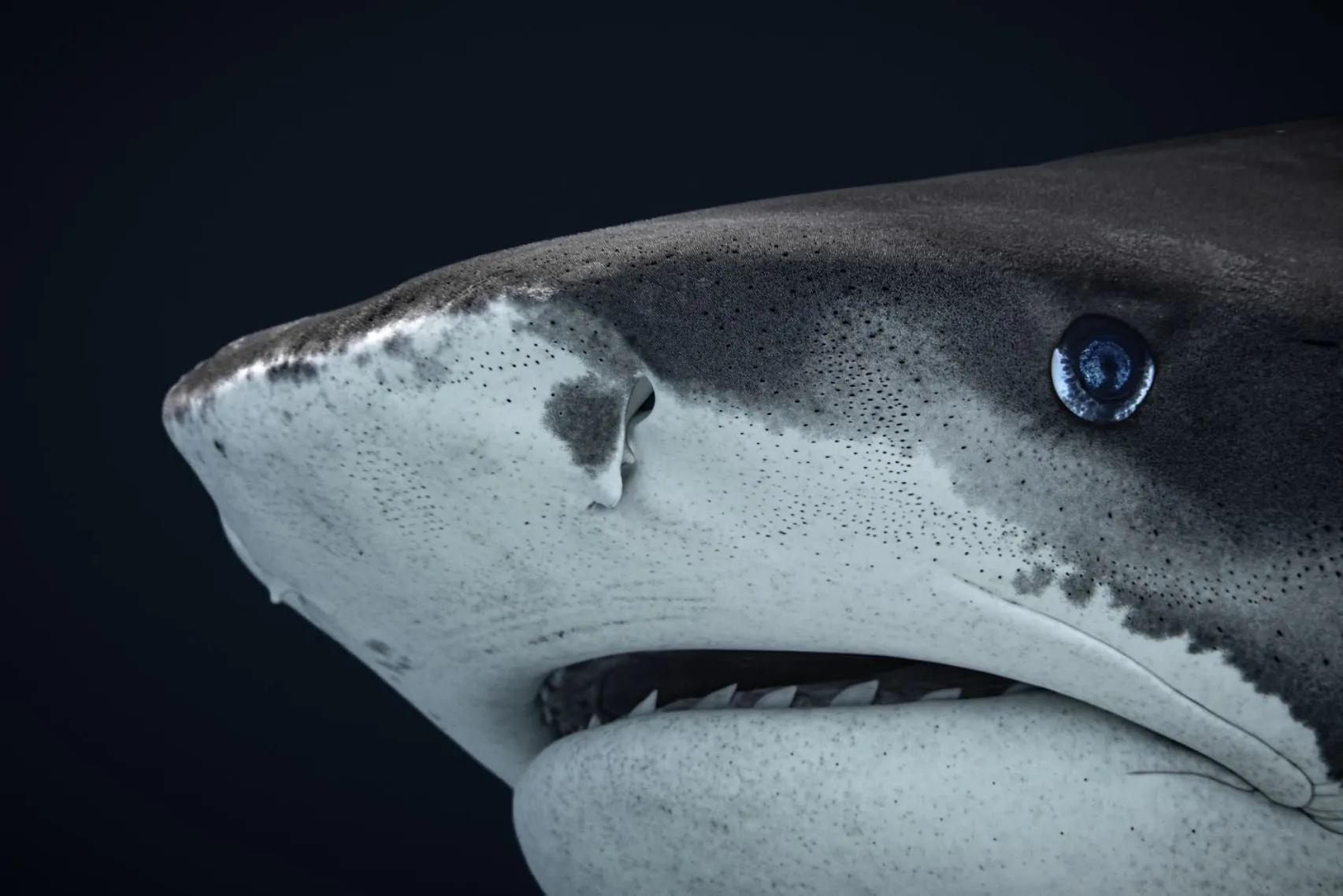
Here’s the list of predators and demanding customers that make the Reef tick:
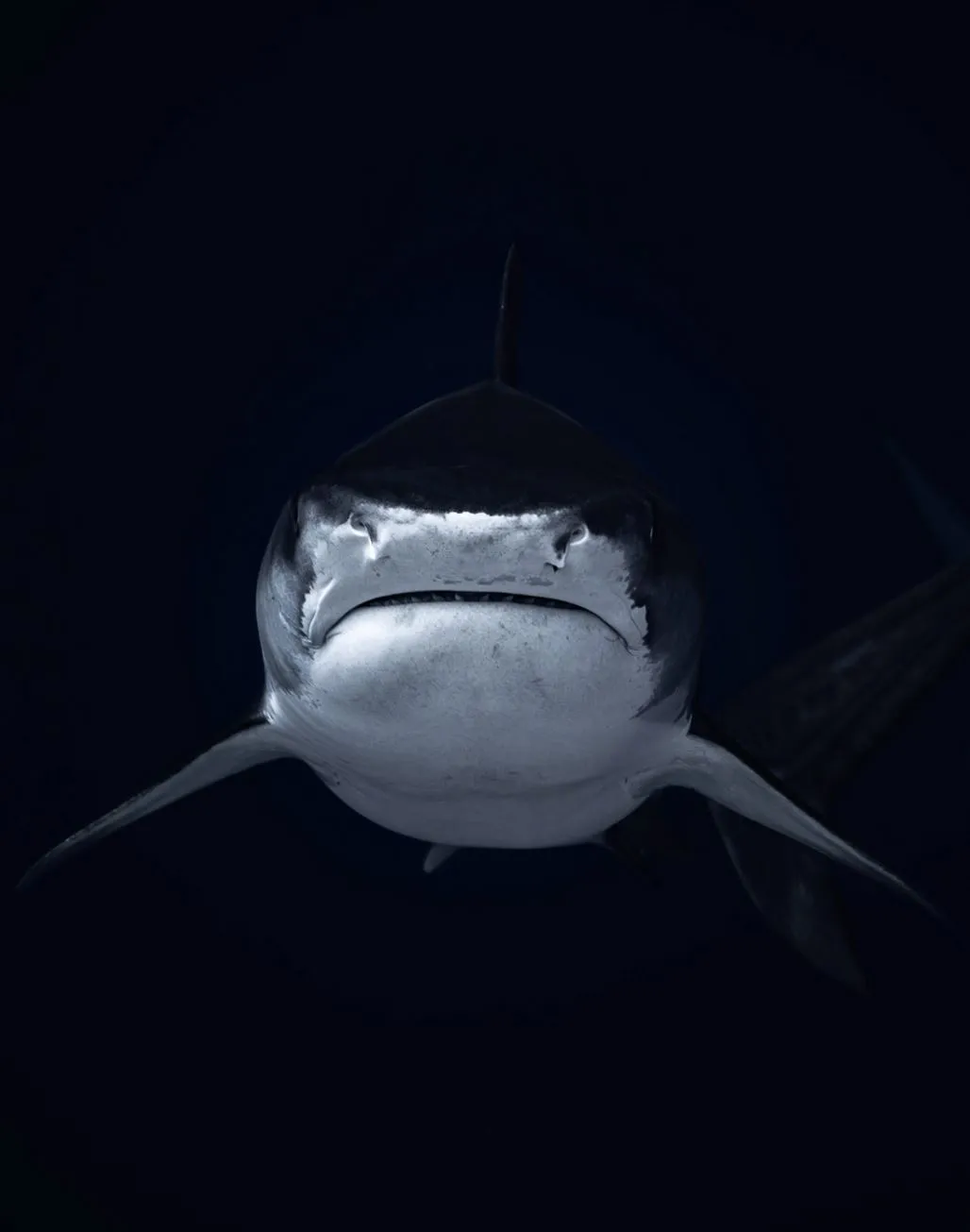
- Tiger Shark — the apex of the apex
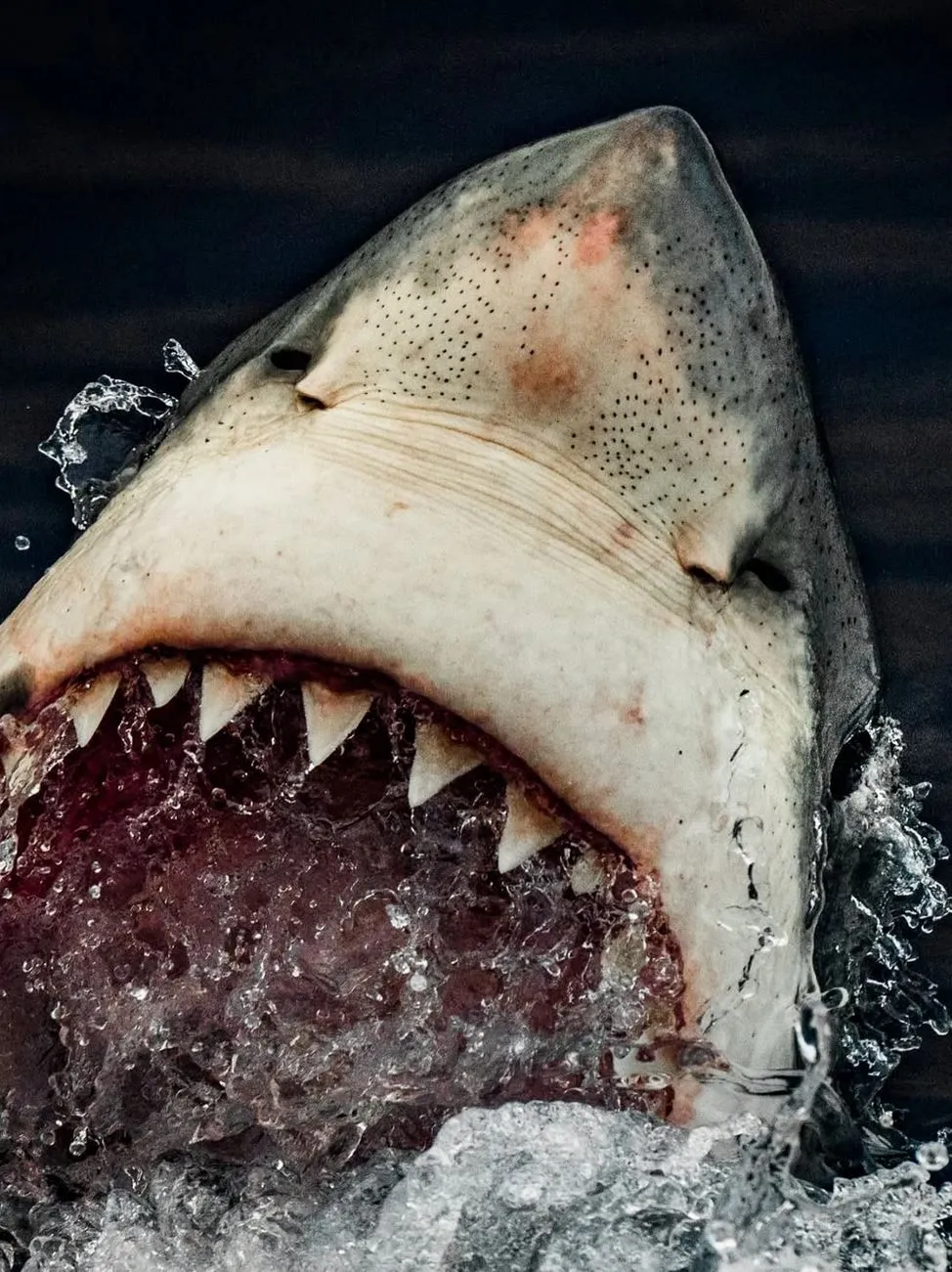
- Great white shark — rare here but still a top hunter
- Hammerhead shark — pelagic and powerful
- Reef sharks — including blacktips and whitetips
- Black marlin — lightning fast and built for attack
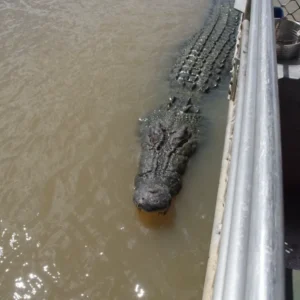
- Saltwater crocodile — inshore only
- Manta Ray — not a predator, but often confused due to size
- Box jellyfish & Irukandji jellyfish — silent, drifting threats
- Blue-ringed octopus — tiny but deadly
- Cone shells — slow, venomous marine gastropods
- Crown-of-thorns starfish — a coral-eating predator
- Epaulette shark — a tidy little reef specialist
Yes, they’re predators — but in the same way your local ranger or fisheries officer keeps things in order. Lose them and the whole Reef wobbles.
Sharks Worth Respecting (Not Fearing), According to the Science
If you ask the Reef Authority or the Great Barrier Reef Foundation what people get wrong about sharks, it’s simple: sharks aren’t the villains. They’re the quality-control team. They clean up the weak, keep populations healthy and regulate behaviour across the entire reef ecosystem.
On tours, when someone whispers, “I’m scared of sharks,” I always say the same thing — you’re not on the menu. That line’s saved more panicked snorkellers than I can count.
Quick Facts From Marine Researchers
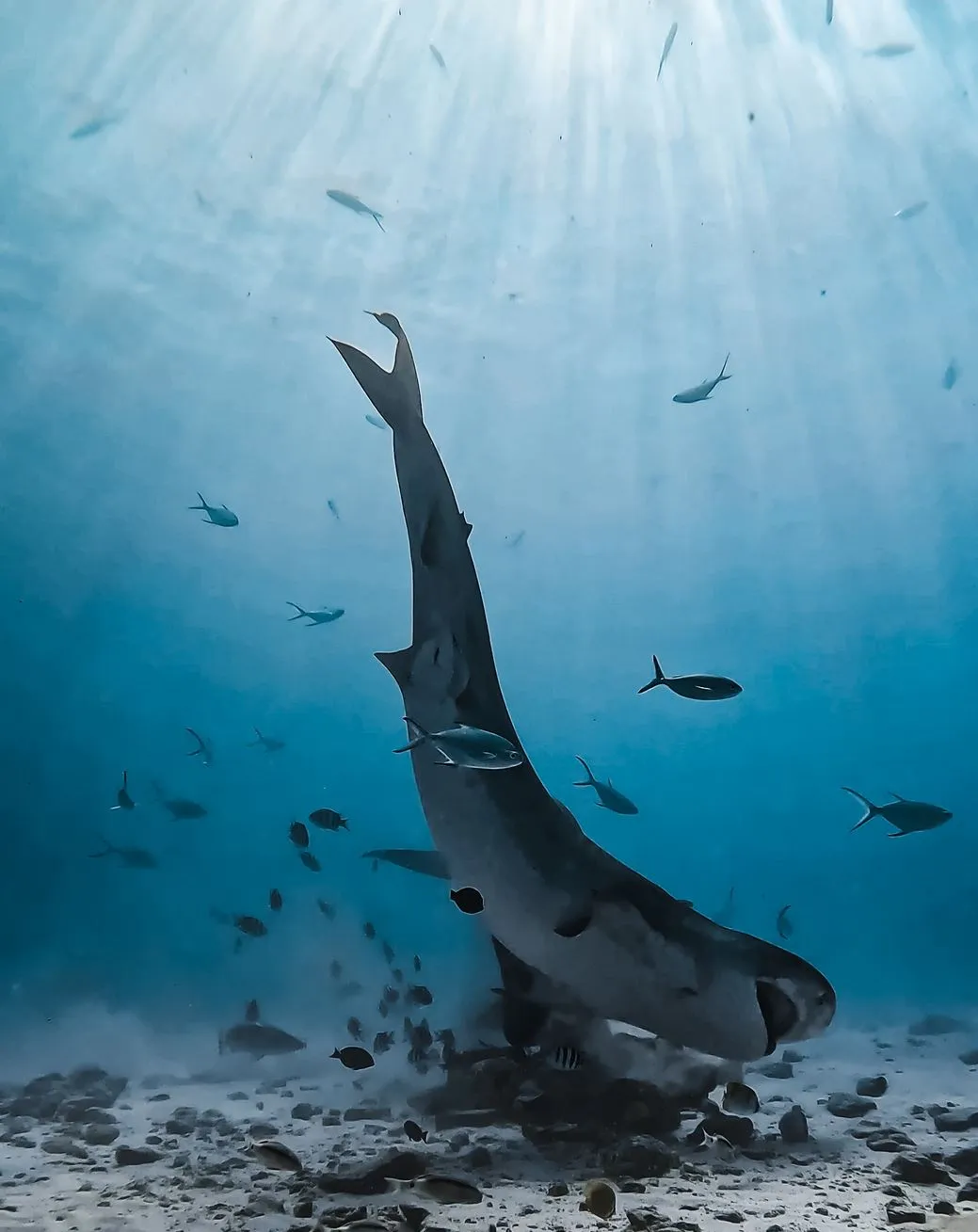
- Sharks regulate fast-breeding fish
- Apex predators stop the Reef from collapsing
- Removing sharks accelerates coral decline
- Shark depredation (sharks taking fish off lines) rises when ecosystems are stressed
- Climate change, sea surface temperature shifts, and ocean acidification are altering shark behaviour
It’s a tough time to be a predator — and an even tougher time to be a coral reef trying to survive it.
The Real Apex: The Tiger Shark — The Reef’s Top Hunter

If we’re talking ocean’s top predators, the Tiger Shark (Galeocerdo cuvier) is the heavyweight. I’ve only seen a few in years of reef guiding — usually out beyond the Ribbon Reefs or the drop-offs around Osprey Reef in the Coral Sea Marine Park. You don’t mistake them when you see one. They move like they know they’re in charge.
Why the Tiger Shark Reigns Supreme
- Size: 4–5 metres
- Diet: turtles, rays, marine mammals, sea snakes, pelagic fish
- Role: Apex predator — zero natural predators except orcas
- Behaviour: Slow, confident, wide-ranging
- Status: Found throughout the Coral Sea and outer-shelf reefs
They control turtle populations, schooling fish behaviour and how marine mammals move through the reefscape.
Stat Snapshot: Tiger Shark vs Other Reef Predators
| Predator | Average Length | Behaviour | Risk to Humans | Notes |
|---|---|---|---|---|
| Tiger shark | 4–5 m | Apex, opportunistic | Extremely low | Top predator of the Reef |
| Bull shark | 2.5–3.5 m | Estuaries + reef edges | Low | Favours murky water |
| Reef shark (blacktip/whitetip) | 1.6–2 m | Timid, territorial | Very low | Most commonly seen |
| Saltwater crocodile | 4–6 m | Ambush predator | High in estuaries |
Not common on the outer reef |
| Giant grouper | Up to 2.7 m | Ambush feeder | None | Eats fish, not people |
Where to See (or Avoid) Tiger Sharks on the Reef
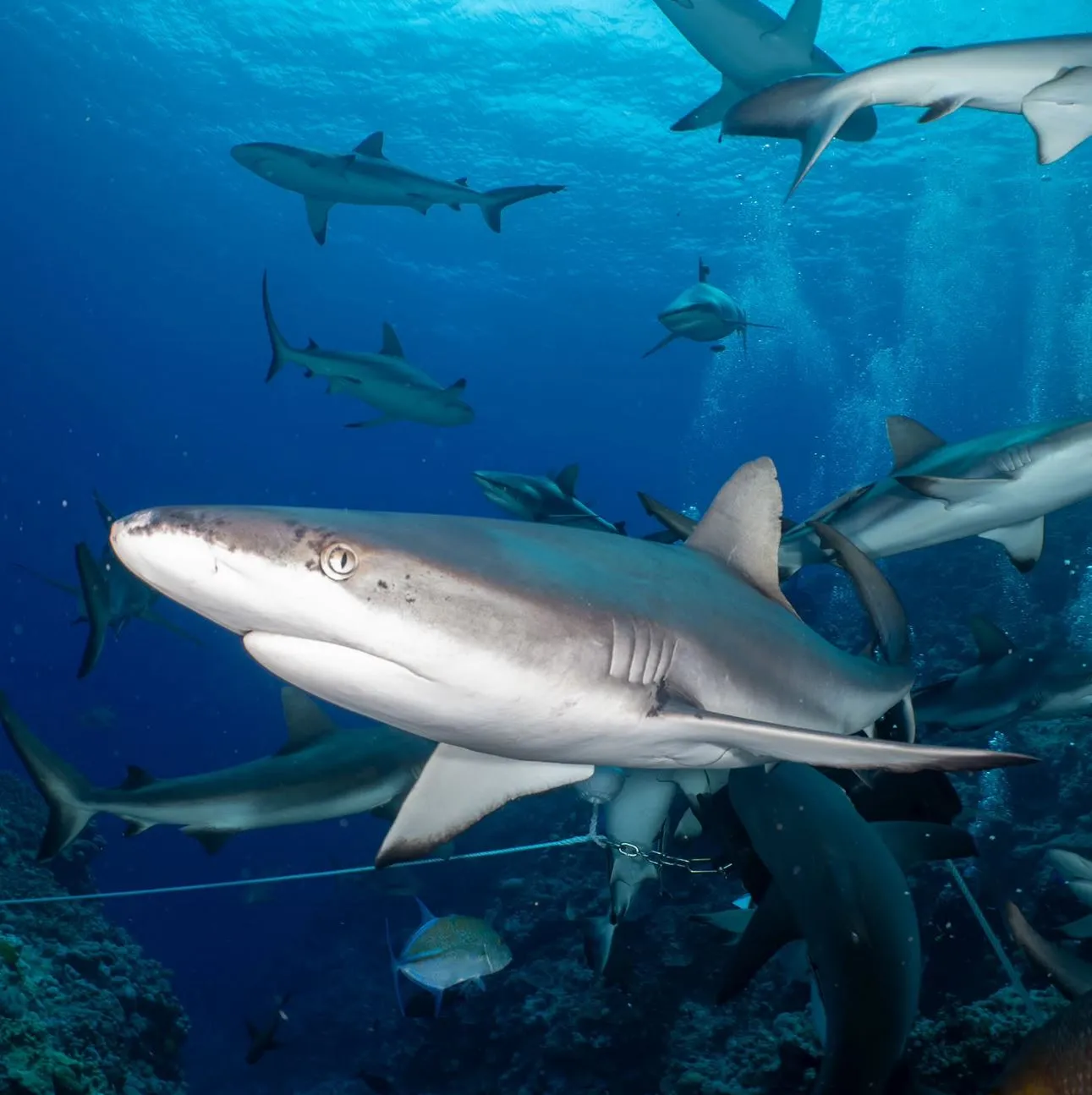
Most people will never see a tiger shark — and for many, that’s a relief. They’re found more often around deeper channels, reef drop-offs and areas with healthy turtle populations.
But if you’re a wildlife enthusiast keen to know where these kings of the reef roam, here’s where they occasionally pop up.
Known Tiger Shark Hotspots (Deep Water Only)
Best seen by advanced divers, researchers or lucky helicopter spotters:
- Osprey Reef — pelagic paradise, major predator action
- Raine Island — turtle-nesting mecca
- Lihou Reef — remote, pristine, tiger territory
- Swains Reefs — southern frontier walls
- Coral Sea Marine Park — huge ranges, deep currents
If you’re diving with a reputable dive operator, you’ll get proper safety briefings and wildlife behaviour updates, often guided by Tourism and Events Queensland and “Navigate With Care” protocols.
Places Most Travellers Visit (And Tiger Sharks Don’t)
Popular snorkelling spots:
- Fitzroy Island
- Michaelmas Cay
- Moore Reef
- Low Isles
- Green Island
- Frankland Islands
- Agincourt Reef
Across thousands of trips, I’ve never had a tiger shark interaction at any of these mainstream locations.
How to Stay Safe Around Big Marine Hunters
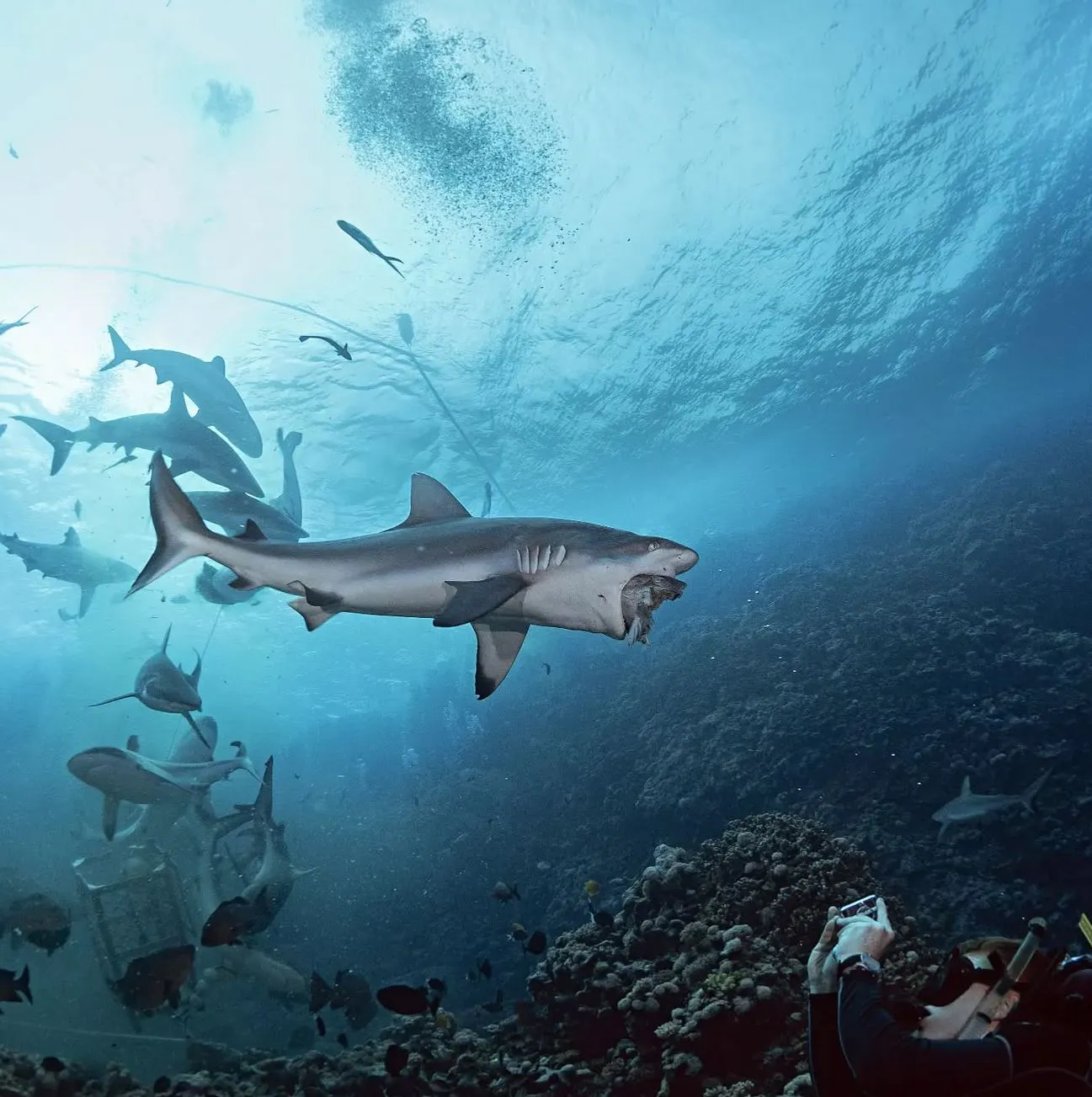
The Reef is safe when you respect it. Most issues occur when travellers break simple rules — swimming during box jellyfish season off Cape Tribulation, chasing turtles, fishing in restricted zones or ignoring Queensland recreational fishing rules.
Here’s the practical stuff we drill into every group.
My Go-To Predator Wise Tips for Travellers
- Stay calm in the water — thrashing = distressed animal behaviour
- Keep your distance from turtles and rays — tigers follow turtles, not tourists
- Avoid swimming at dawn/dusk — low light hunting times
- Stick with your guide — we know the channels and currents
- Don’t swim near bait balls — nature’s version of a food court rush
- Listen to marine briefings — the simplest rule, most often ignored
Snorkelling the lagoons or flying over the Coral Sea, respect is the key.
And if you ever want to know the secrets of predator safe snorkelling or deep reef wildlife, the team at Great Barrier Reef Tours can give you the inside word — with real stories, real science and straight up Aussie advice.
What I Tell Nervous First-Timers
I always bring out this analogy:
“Walking into the supermarket at lunchtime isn’t exactly the same as a wild beast on the hunt. Sharks see you as just a big, strange bubble-blowing thing that doesn’t interest them in the slightest”
At first, I’m not sure anyone really takes it on board – but as soon as they get to see reef sharks just chugging along with all the excitement of a sleepy Labrador on a Sunday morning, then you can really start to feel that tension start to melt away.
FAQ
What’s the biggest apex predator you’ve got on the Great Barrier Reef?
That’d be the tiger shark, still the reef’s top dog when it comes to predators.
How often do you encounter sharks on a Great Barrier Reef tour?
Not very often at all – the chances of seeing shark activity around the main tour spots are virtually zero.
Do box jellyfish actually make an appearance off the coast at all?
Rarity of rare – these are more the kind of thing you’d see near beaches and estuaries than out in the open water.
Can you snorkel safely alongside reef sharks?
Yeah, no worries – they’re pretty shy, pretty small and just don’t care about us in the first place.
Do great white sharks live on the Great Barrier Reef full-time?
They turn up now and again but aren’t exactly regular residents of the reef.