Is it painful to get a tattoo removed?
You loved it when you got it. Maybe it was a spontaneous matching tattoo on your backpacking trip or an ex’s initials you were sure you’d never regret. And now? You’re Googling “Is it painful to get a tattoo removed?” while rubbing numbing cream on your dignity.
I’m Olha Po, and in my Melbourne studio, we see tattoo regret walk in every week — sometimes as faded ink, sometimes as panic in the eyes. This guide dives into what it actually feels like to remove a tattoo, how different tattoo removal methods compare, and what you can expect before, during, and after.
Why Tattoo Removal Hurts
Not all pain is created equal. Tattoo removal hurts — but how much depends on your pain tolerance, your skin, the ink, and the method used.
Your Pain Threshold Is Part of the Story
Some clients compare it to getting snapped with a rubber band. Others say it’s worse than getting the tattoo in the first place. Either way, it’s quick — but intense.
Your pain level will depend on:
- Body area: Inner arms, ribs, and ankles are more sensitive.
- Skin type and sensitivity: Thin or reactive skin may feel it more.
- Ink depth and colour: Older, black ink tattoos are often easier to remove than white ink or heavily saturated designs with white highlights.
- Your cycle and stress: Yep, hormonal shifts and anxiety can ramp up pain perception.
The Type of Laser Makes a Big Difference
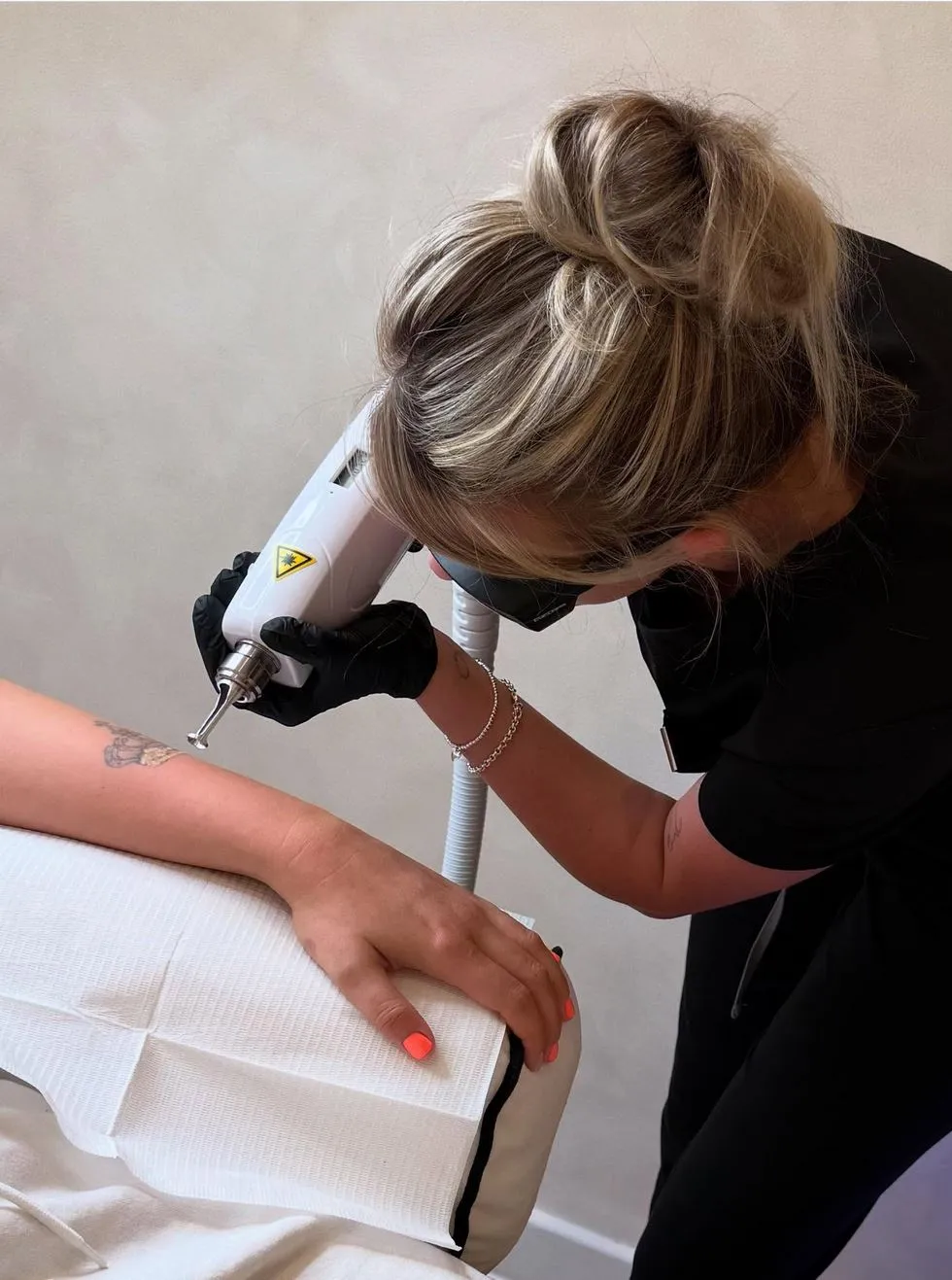
Not all laser light is created equal. At our Cosmetic Tattoo Studio Face Figurati in Melbourne, we use Q-switched and picosecond lasers, which break down tattoo pigment into tiny particles using ultra-fast pulses of laser energy targeting the ink precisely.
Modern machines like the PicoSure technology and Quanta Discovery Pico Plus use picosecond laser energy and homogenous beam technology for faster ink clearance. This means fewer laser removal sessions and shorter recovery time, especially for stubborn tattoo ink.
Advanced cooling options like cold air systems or an ice pack can also help during treatment.
The Most Common Methods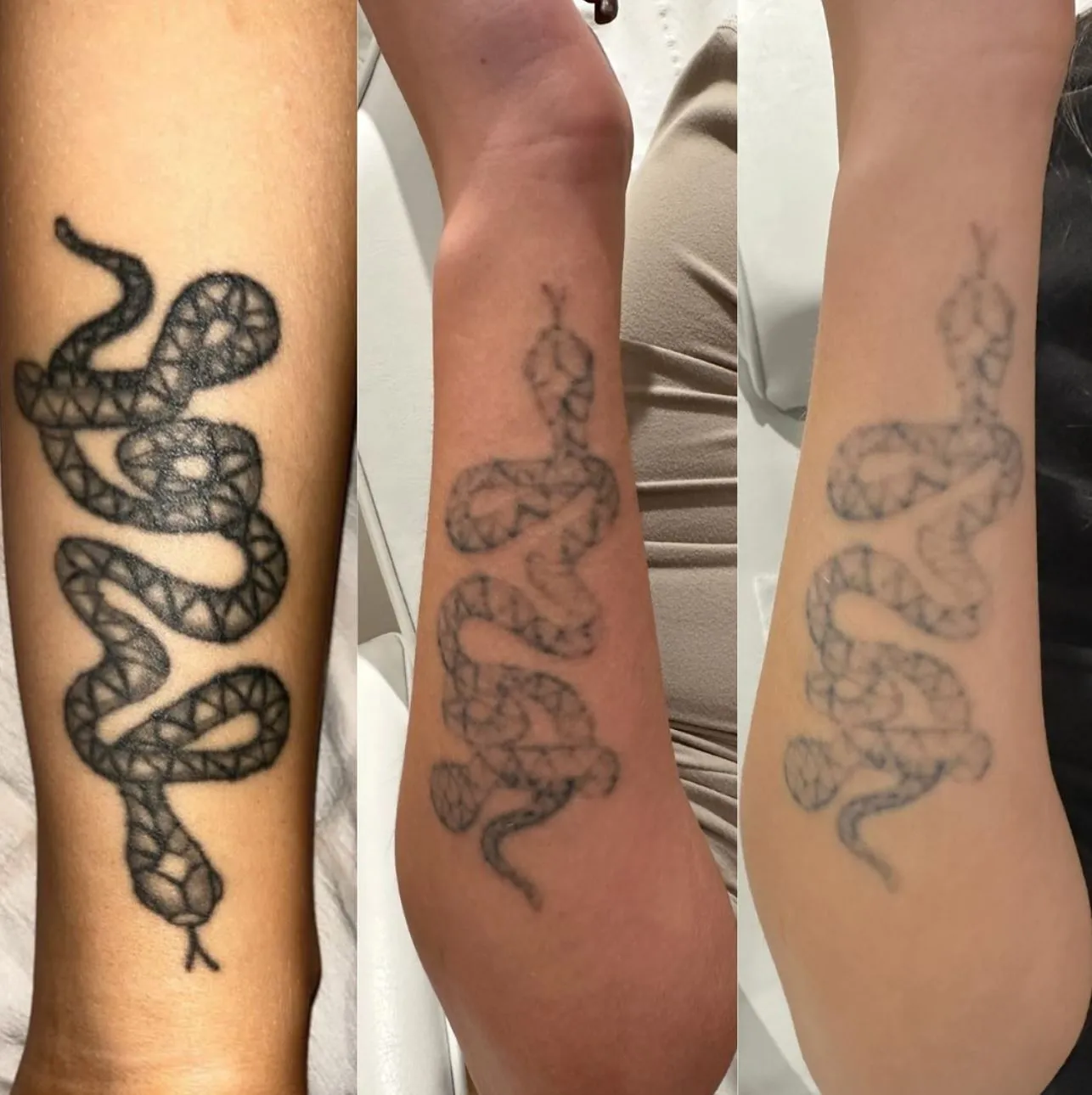
1. Laser Tattoo Removal
Pain Level: Moderate to high
The most popular method by far. A high-intensity laser light beam targets tattoo pigment, breaks it into particles that your lymphatic system clears.
Pros:
- Works on most tattoo ink colours
- Minimal scarring when done by trained laser technicians
- Customisable settings for skin sensitivity
Cons:
- Feels like hot snaps or pinpricks
- Multiple laser removal sessions required (5–10+)
- Possible skin irritation or temporary skin discoloration
2. Saline Tattoo Removal
Pain Level: Mild to moderate
More commonly used for cosmetic tattoos (brows, lips), saline removal involves implanting a salt-based solution into the skin to draw out pigment.
Pros:
- Less heat = less risk of hyperpigmentation or hypopigmentation
- Gentler on delicate areas (e.g. face)
Cons:
- Slower results, not ideal for large or deep tattoos
- May sting or itch as it heals
3. Surgical Excision
Pain Level: High (with downtime)
Used only for small tattoos. The skin is literally cut out and stitched closed. It’s as dramatic as it sounds.
Pros:
- One and done
- Good for tiny tattoos in discreet areas
Cons:
- Requires local anaesthetic injections
- Leaves a scar and longer recovery time
4. Chemical Peels
Pain Level: Moderate (depending on depth)
Some off-label methods use chemicals like trichloroacetic acid (TCA) to peel away layers of skin containing pigment.
Pros:
- Works for very superficial or faded tattoos
- May work where a laser isn’t suitable
Cons:
- Higher risk of skin irritation and side effects
- Often unpredictable results
What It Feels Like During a Session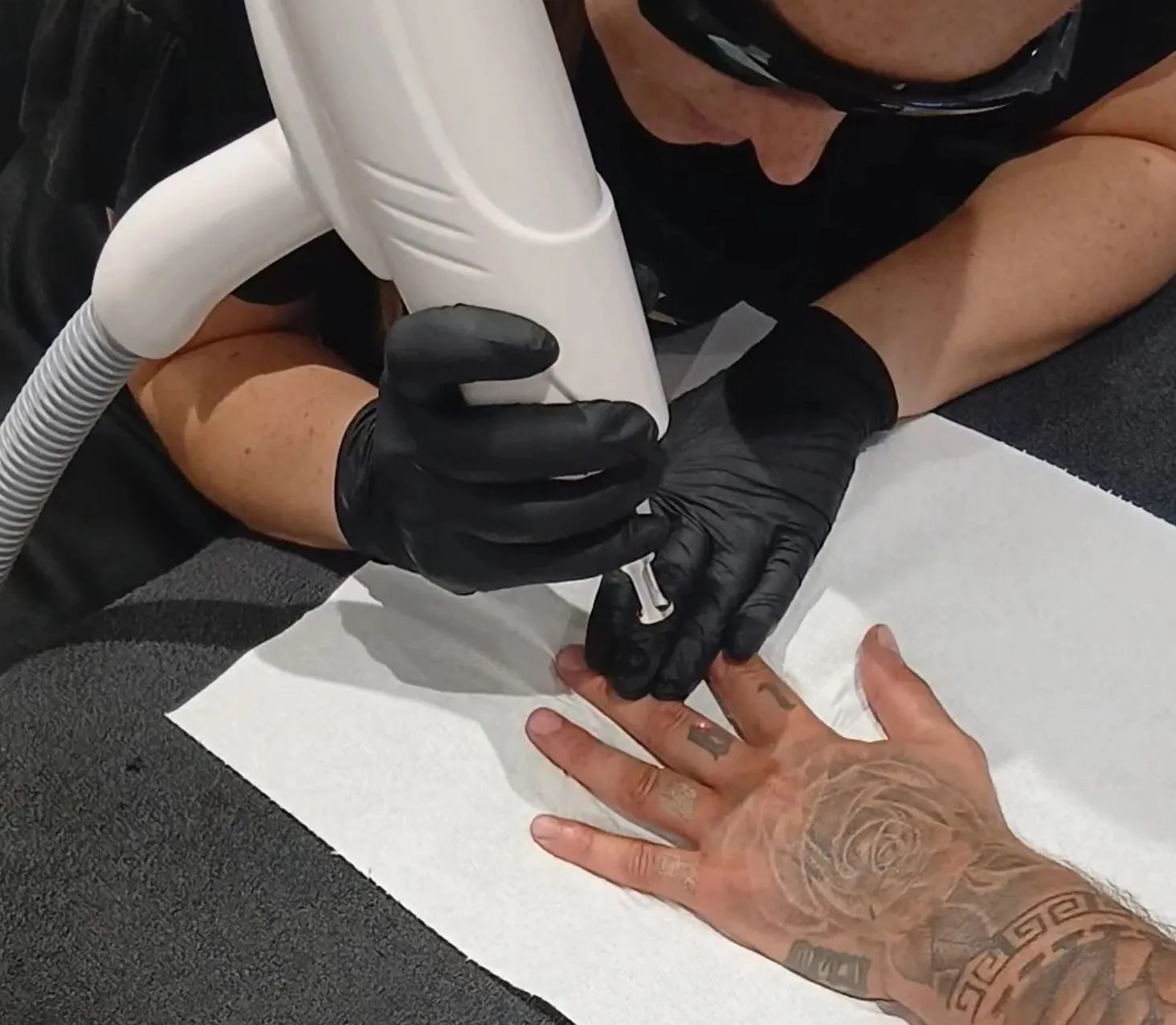
Most sessions are under 30 minutes. But don’t let the short time fool you.
Clients say:
- “Hot elastic band snaps”
- “Tiny shocks”
- “Spicy zaps”
We recommend distraction techniques like squeezing stress balls or listening to a podcast. Also, using numbing cream beforehand or applying a cold compress after helps.
What Happens Next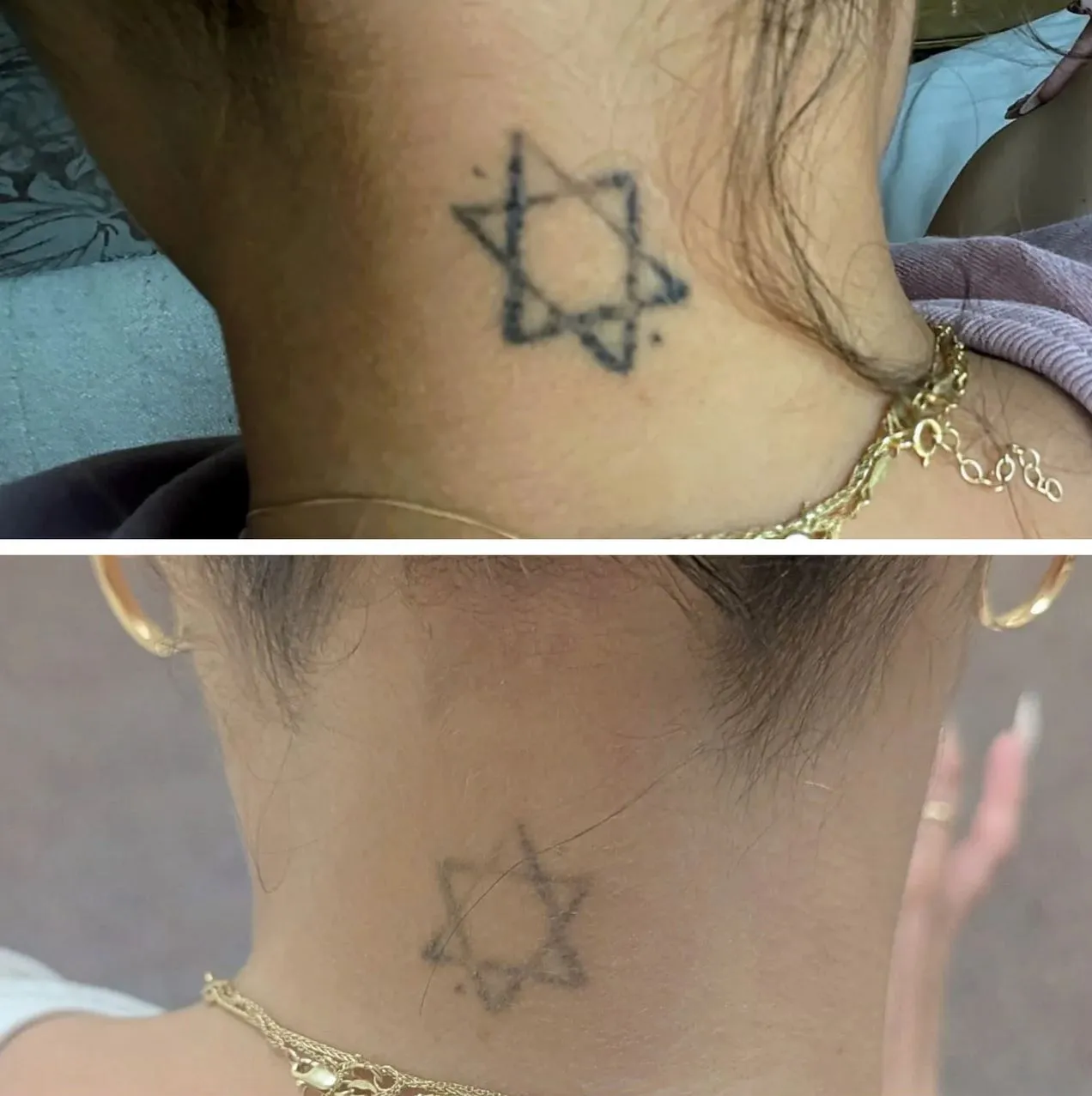
Your skin will be sunburnt, swollen and possibly blistered. This is the body’s inflammatory response to the laser.
You’ll need to:
- Keep it clean and dry
- Use a recommended healing balm (not just any cream)
- Avoid sun, saunas and sweaty workouts
- Apply zinc oxide sunscreen daily
Healing takes 1–2 weeks per session. Full removal? 6–12 months of spaced treatments.
Pain Relief Tips (That Actually Work)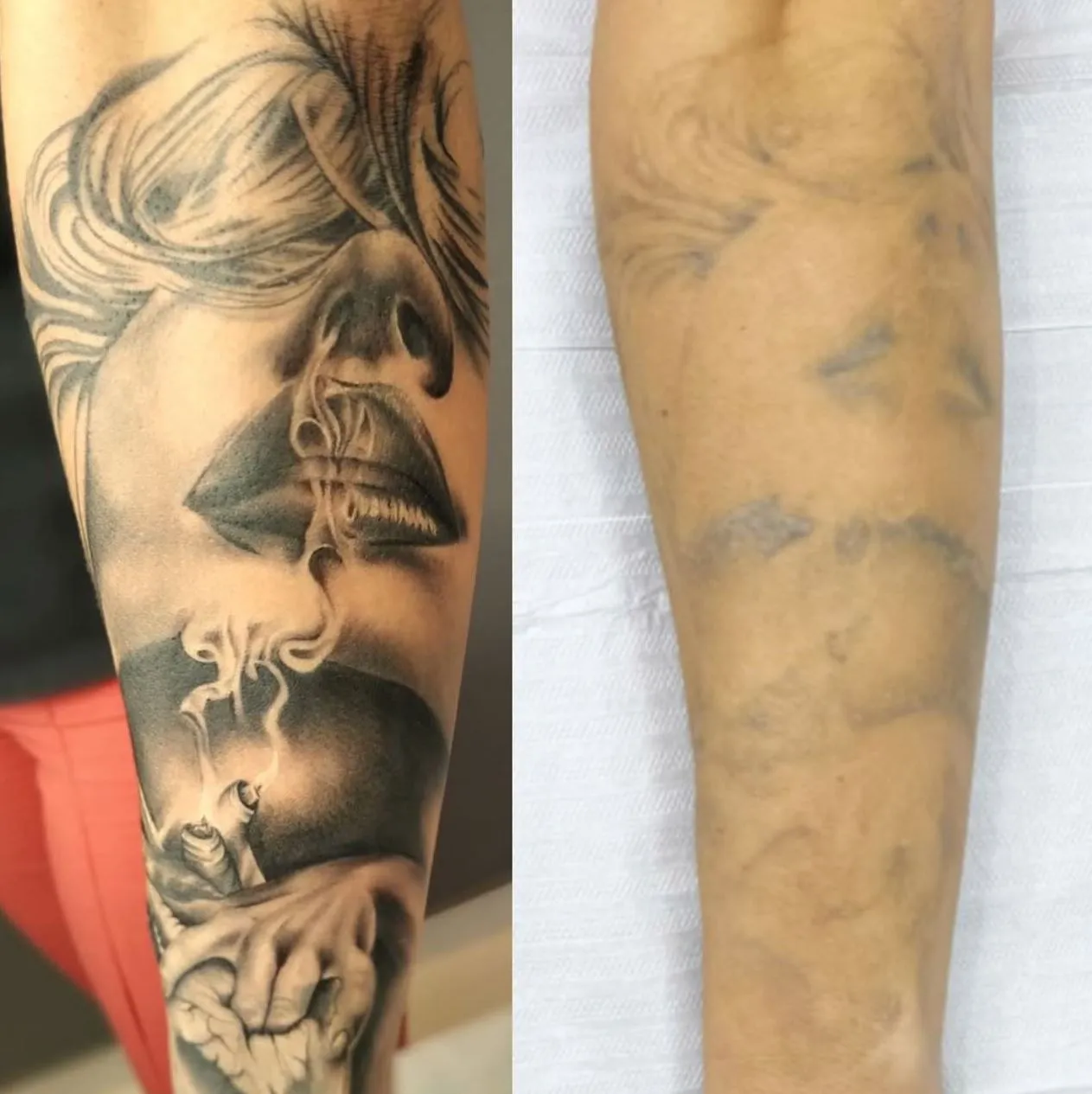
- Topical numbing cream: Applied 30–60 mins before (must be studio-approved)
- Ice packs and cold compresses: Numbs nerve endings and reduces swelling
- Local anaesthetic injections: Rare but sometimes used for sensitive areas
- Distraction: Music, podcasts, stress balls or a chatty technician helps too
Table: Tattoo Removal Pain Scale by Method & Area
| Removal Method | Body Area (Pain Level) | Description |
|---|---|---|
| Laser (Q-Switched) | Ribs, inner arm (8/10) | Sharp, hot, fast snaps |
| Laser (Pico) | Upper arm, thigh (6/10) | Less intense, quicker session |
| Saline (Brows/Lips) | Eyebrows, lips (4-6/10) | Tingling, stinging, mild itch |
| Surgical Excision | Anywhere (Varies) | Pain from surgery and recovery |
| Chemical Peel (TCA) | Small areas (5-7/10) | Burning or peeling sensation |
Does It Hurt More Than Getting the Tattoo?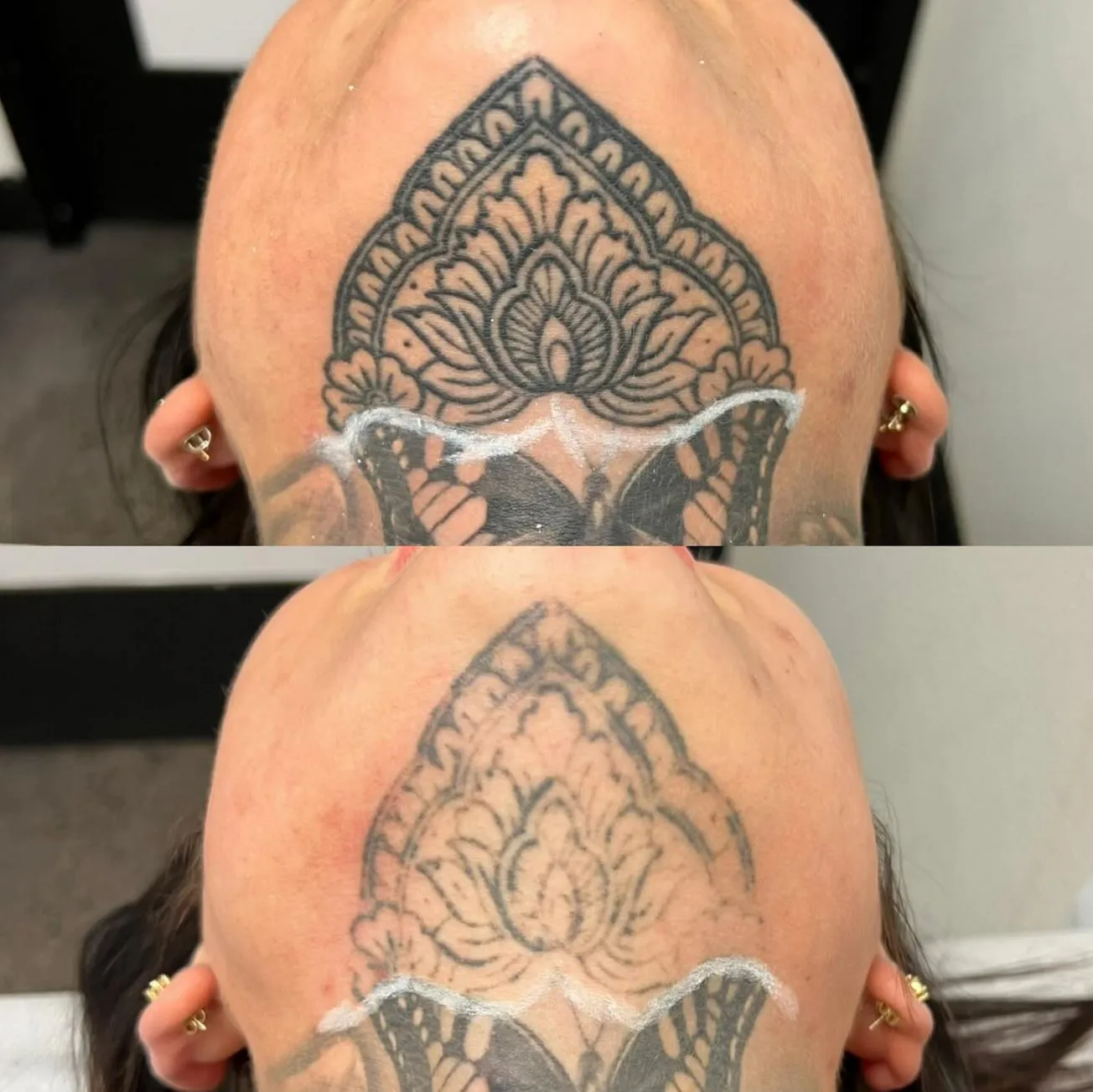
This one divides people. Some say tattooing was worse, others say laser tattoo removal was sharper. It depends on:
- Where the tattoo is
- How thick the lines and ink saturation are
- Your mood, pain tolerance, hydration, and skin sensitivity on the day
In general, laser tattoo removal is faster, but more intense. Like ripping off a Band-Aid versus slowly peeling it.
2025 Beauty Trend
Data from the Australian cosmetic skincare industry reports show a 27% rise in laser tattoo removal bookings in the past year alone. Clients are prioritising clear skin, especially for job interviews, facial corrections and cosmetic tattoo fixes.
Melbourne’s inner suburbs are seeing a spike in brow tattoo removals — a ripple effect from the over-saturated ombré brow trend.
Pop into our Cosmetic Tattoo Studio Face Figurati in Melbourne or book a consultation online. We’ll talk you through your options (and yes, we’ll be honest about the pain).
When to Avoid Tattoo Removal
- You’re pregnant or breastfeeding
- You have active skin infections or sunburn
- You’re on photosensitising medications (like Roaccutane)
- You’re about to travel somewhere hot (think Bali + peeling skin = ouch)
Always disclose your medical history, allergies and medications before booking. Qualified laser technicians and medical professionals will assess suitability.
FAQ
Does numbing cream work for tattoo removal?
Yes, especially when applied and occluded (covered) properly before the session. It won’t remove all sensation, but it takes the edge off.
Can I take painkillers before my tattoo removal?
Avoid aspirin or ibuprofen, as they can increase bleeding. Paracetamol is generally safe — but always check with your technician first.
Will tattoo removal leave scars?
With proper laser treatment technique and aftercare, scarring is rare. Picking at scabs or skipping healing instructions increases your risk.
How long between removal sessions?
Usually 6–8 weeks. Your skin needs time to heal and your lymphatic system needs time to flush out ink particles broken down by the laser light beams.
Is it more painful to remove cosmetic tattoos (like brows or lips)?
Cosmetic areas can feel more sensitive, but the removal process (especially saline or fractional laser treatments) is generally gentler than traditional body tattoo laser treatment.